2026-09-15 ·
Top 5 Tree Species Perfect for El Monte’s Urban Environment
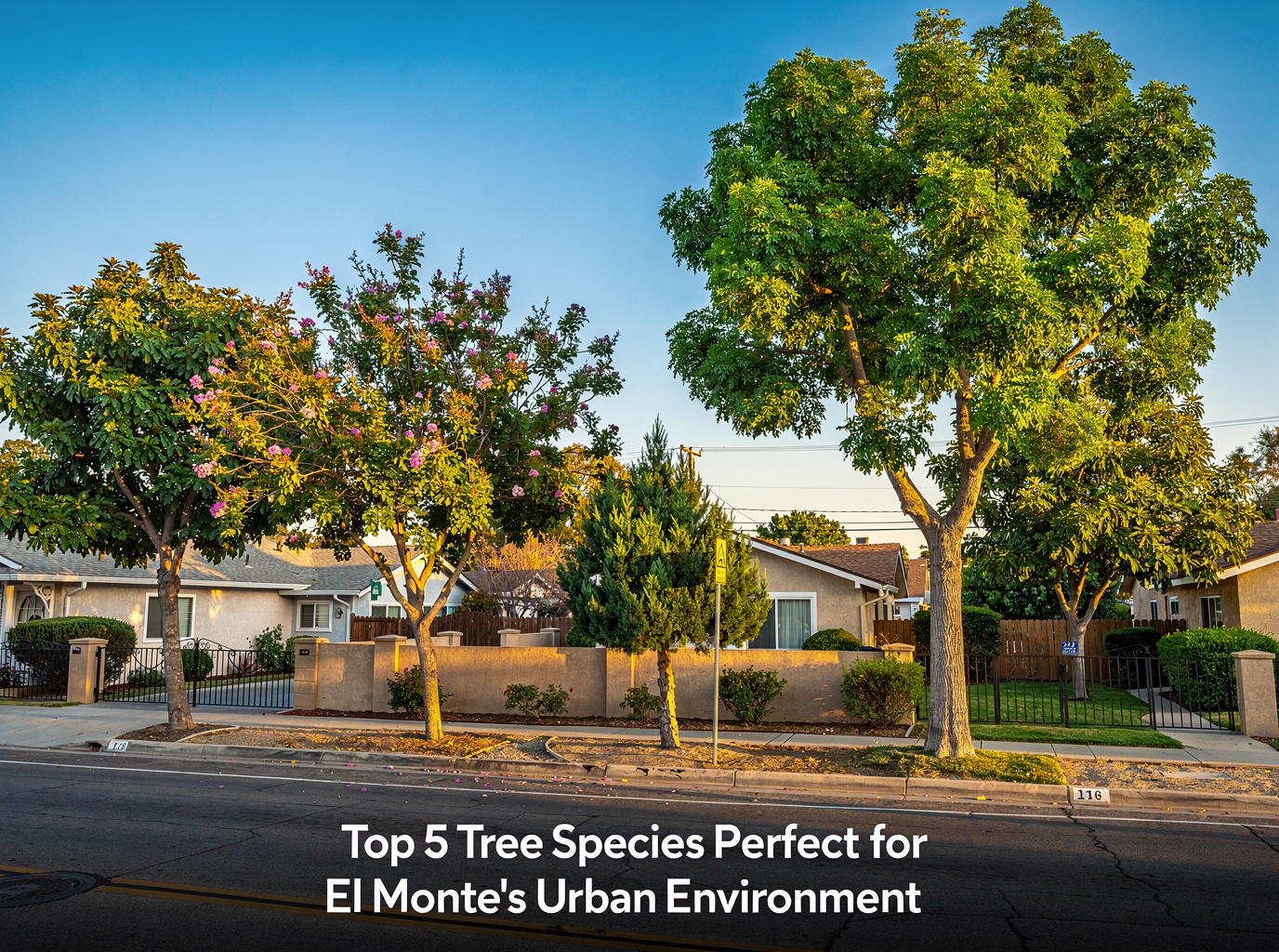
The top five tree species perfect for El Monte’s urban environment are the California live oak, olive tree, jacaranda, crape myrtle, and Chinese pistache. These choices handle the hot summers and mild winters typical of Los Angeles County while fitting smaller lots found near El Monte City Hall and Legg Lake.
Understanding El Monte’s Urban Growing Conditions
El Monte sits in Los Angeles County with a warm Mediterranean climate that brings temperatures above 90 degrees for weeks each summer and occasional winter lows in the 40s. Urban lots in Downtown El Monte, South El Monte, and near Arroyo High often feature compacted fill soil and narrow planting strips beside sidewalks or driveways. These conditions limit root spread and increase heat reflection from pavement. Trees must tolerate drought once established yet survive occasional heavy winter rains that pool around foundations. Residents in nearby Arcadia and West Covina face the same constraints, so species with deep roots and moderate canopies reduce conflicts with overhead lines and neighboring structures. Soil aeration and proper planting depth become essential steps before any new tree goes into the ground.
California Live Oak
The California live oak forms a broad evergreen canopy that provides shade over driveways and patios in El Monte’s heat. It reaches 40 to 60 feet tall with a similar spread, making it suitable for larger yards in North El Monte rather than tight downtown spaces. Once established after two to three years, it requires little supplemental water beyond normal rainfall. Its acorns attract local wildlife while its dense wood resists breakage during the occasional Santa Ana winds that sweep through the San Gabriel Valley. Homeowners near Legg Lake value the tree for its longevity, often exceeding 100 years when sited away from constant irrigation that can cause root rot. Regular crown cleaning keeps the canopy open enough for air flow without sacrificing shade.
Olive Tree
Olive trees thrive in El Monte’s mild winters and hot, dry summers, producing fruit after five to seven years. They grow 20 to 30 feet tall with a rounded shape that fits side yards along South El Monte streets. Their silvery leaves reflect sunlight, lowering heat load on nearby homes. Olives tolerate the alkaline soils common in Los Angeles County and need only deep watering every three to four weeks once roots are set. Fruit drop can stain pavement, so many owners choose fruitless cultivars for planting strips near El Monte Historical Museum. The tree’s slow growth rate means less frequent pruning compared with faster species, though annual checks for scale insects help maintain health.
Jacaranda
Jacaranda produces masses of lavender blooms in late spring that stand out against El Monte’s stucco homes. It reaches 25 to 40 feet with a spreading crown that suits corner lots in Downtown El Monte. The tree prefers well-drained soil and handles the region’s temperature swings without leaf scorch. Jacarandas drop fine leaflets in winter, creating a light mulch layer that breaks down quickly on lawns. They perform well in the same conditions found in Baldwin Park and West Covina, where summer heat accelerates growth. Young trees benefit from staking during the first two windy seasons, after which the wood strengthens naturally.
Crape Myrtle
Crape myrtle offers summer color with crepe-like flowers in shades of pink, red, and white while tolerating El Monte’s full sun exposure. Mature specimens reach 15 to 25 feet, fitting narrow planting areas between sidewalks and homes in South El Monte. The tree’s exfoliating bark adds winter interest and its small leaves minimize cleanup. It withstands the occasional winter chill without damage and requires moderate water during the first three summers. Crape myrtles planted near Arroyo High show strong resistance to powdery mildew when given adequate air circulation. Their compact size reduces the need for major pruning once the lower limbs are cleared for pedestrian clearance.
Chinese Pistache
Chinese pistache develops brilliant orange-red fall color that contrasts with El Monte’s evergreen landscape. It grows 30 to 40 feet tall with a rounded crown that fits many residential lots near Legg Lake. The species tolerates compacted urban soil and the alkaline conditions prevalent throughout Los Angeles County. Once established, it needs water only during extended dry spells. Its deep taproot helps it anchor against wind while its moderate growth rate limits conflicts with overhead utilities. Homeowners in nearby Arcadia often select this tree for its drought tolerance after the first two years of root development.
Planting and Maintaining These Trees in El Monte
Selecting the right species is only the first step; proper planting timing and follow-up care determine long-term success. The best window for new trees in El Monte runs from late fall through early spring when cooler temperatures reduce transplant stress. Best Time of Year for Tree Planting in El Monte, CA outlines soil preparation steps that match local conditions. After planting, deep root fertilization every other year supports growth without encouraging weak surface roots. Tree planting crews familiar with El Monte lots can assess space constraints near power lines and foundations. Annual crown thinning keeps canopies balanced, and monitoring for pests common to Los Angeles County prevents small issues from becoming removal projects later.